I work at AWS, but all opinions, code, and views here are my own and not those of Amazon.
I took Thanksgiving week off to finish moving a 25-year-old PHP app onto AWS serverless. The groundwork started in the spring, but the heavy lifting happened in the last several days: 160 of the project’s 172 commits landed between November 21 and 24. On the first full day on the new system, it sent more than 40,000 survey invitations to radio listeners around the country. Hundreds of listeners started surveys, and dozens had completed them by the end of the day, which is what a normal day looks like.
That was the goal: the listeners noticed nothing. This is how I got there.
Where this started
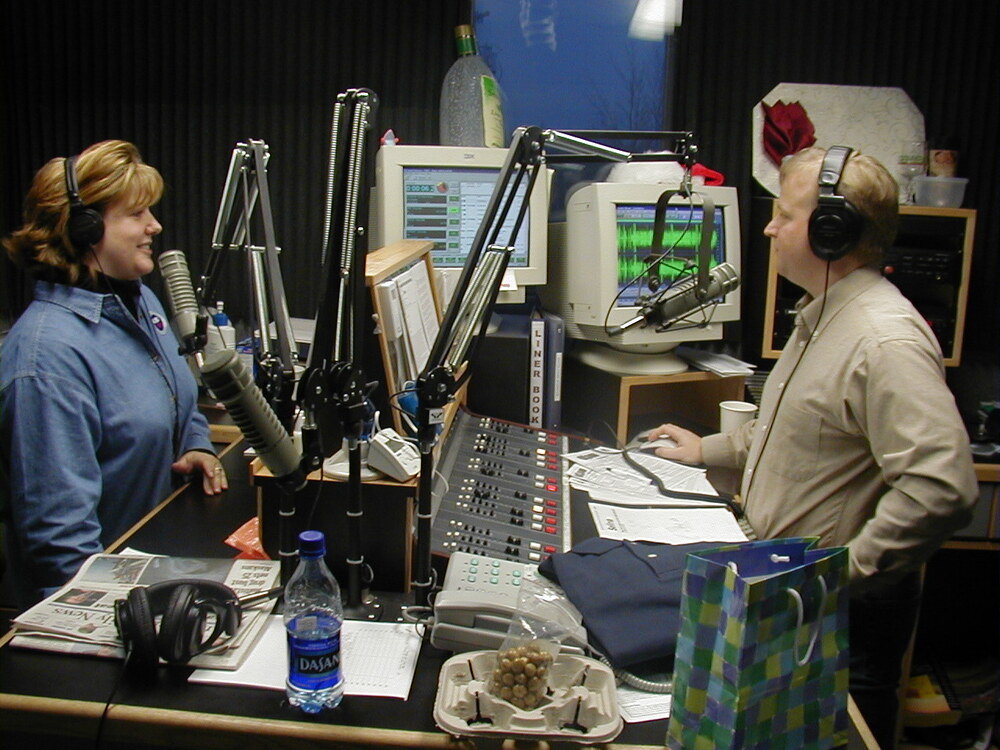
In 2001 I was managing radio stations in Anchorage, Alaska. I wanted to know what my listeners actually liked, and the research options were expensive. I knew nothing about web development, so I bought books from Amazon (the LAMP stack for beginners, MySQL basics) and taught myself enough to build a survey tool.
It worked. I used it to poll my audiences, and the ratings on all of my stations improved. By the end of 2001 a radio research company bought the app and hired me to run it. That was the moment I left radio for tech.
That company closed in 2014 as the radio industry consolidated. I went looking for developer jobs, and within months I had an offer from a consulting agency in San Francisco. I’ve worked in tech ever since, and I’m now at AWS.
The system I was leaving
By November 2026 the app was a classic LAMP stack spread across several DigitalOcean servers: a PHP web server with a cPanel license, a separate old survey app, a MySQL 5.7 database server, and a self-hosted mail server. The repository had more than 1,800 commits and over 3,000 PHP files.
The legacy application was sending just over 100,000 emails a month to a panel of over 500,000 opted-in listeners.
Nothing was on fire. But PHP and MySQL 5.7 were aging, and every server was mine to patch. I wanted managed services and no servers to look after. The new app runs on Amplify Hosting, API Gateway and Lambda, RDS MySQL, Cognito, SQS and SES, all defined in CDK. None of that is exotic. How the migration was run is the interesting part.
How the last stretch went
Investigate before building. Before writing code, an AI coding assistant, Kiro, produced read-only analysis documents comparing the old app to the new one. One of them, a parity analysis of the listener-facing survey, concluded the new backend covered about 70% of the listener API but the new front end only about 10%. That one document changed my plan for the week.
Treat the cutover like an operation, not a deploy. The runbook had numbered steps, an owner and a verification for each, and go/no-go gates. I rehearsed against production infrastructure first, and the rehearsal replaced estimates with measured numbers: loading the database took 21 minutes, for example. The plan was a write freeze of about two hours and fifteen minutes, announced as a four-hour window.
Don’t touch the old servers. The old hostnames moved to a CloudFront distribution that serves old assets and redirects old links to the new site. The legacy servers stayed untouched as the rollback target until the new system had soaked. Old survey invitations sitting in people’s inboxes keep working.
Cutover night, and the 5 a.m. text
Cutover night was uneventful, which is the best thing a cutover can be. The excitement started at 5 a.m. on Tuesday, when a station staff member texted me a photo of their login screen and a message that they couldn’t get into the site.
The cause was usernames. In the legacy app, customers signed in with their email address as the username. The new sign-in runs on Amazon Cognito, and my test account had an ordinary username, so every test I ran passed. The real accounts didn’t look like my test account.
The fix was a workaround. Cognito refuses a username in email format when email is also a sign-in alias, so the sign-in code retries an email-shaped username with the @ replaced by %40. Cognito accepts that, the email stays a verified alias, and the backend turns the escaped form back into the original username. Customers still type their normal email. It works for existing and new accounts. Getting there took a long day of troubleshooting and more testing.
The listeners taking surveys never saw any of it. The login problem touched station staff in the admin console. The survey pages, the registration pages and the old links in people’s inboxes kept working. That’s the real lesson of the day. Plan for something to go wrong, protect the people who matter most while you fix it, and test with accounts that look like your real ones.
Where I ended up
In 2001 I taught myself to code from books ordered online, because I wanted better answers about what listeners liked. Twenty-five years later the same app runs on the platform I now work on, and Kiro, the AI assistant I pay for, helped me carry it across in the time most people spend on turkey and football. The listeners got the same survey they always had.
This week I’m also decommissioning servers that ran almost non-stop, and quite reliably, for more than eight years. With the recent news about PHP vulnerabilities, I’m relieved that the project will live on infrastructure that AWS maintains.
The thing I’d tell my 2001 self is that the tools have changed a lot, but the useful habit is the same one I learned then: build the smallest thing that answers the question, then keep going.
Next in this series: Stuck in the SES sandbox? What helped me get production access approved, Moving to pay-per-use: what the first week cost, and the RDS surcharge I didn’t see coming and Nine lessons from using AI on a large migration.



3 thoughts on “I moved the app that started my tech career to AWS over Thanksgiving week”